
Восемь раз пытался открыть камеру хранения и пропал без вести. Куда исчез Маршал Айваса?
Головоломка для следователей: пропавший мужчина, сгоревший автомобиль и шесть часов в попытках получить доступ к камере хранения. После девяти месяцев расследований полиция даже не приблизилась к пониманию того, что случилось с 26-летним Маршалом Айвасом.

Обгоревший грузовик на дороге
В ноябре 2019 года в Британской Колумбии на удаленной лесной тропе туристы обнаружили обгоревший грузовик. Машина находилась в 3 км от хижины Брайана Уоддингтона и в 15 км от основной дороги. Вокруг пикапа очевидцы нашли разбросанные вещи, мобильный телефон и паспорта. Документы принадлежали 26-летнему Маршалу Айваса, вскоре о странной находке заявили в полицию.
Сотрудники полиции позвонили родственникам Айваса, и тогда семьи поняла, что он пропал.
Исчез при странных обстоятельствах
По данным расследования Айвас последний раз виделся с семьей 17 ноября 2019 года. Он упоминал, что должен забрать вещи из камеры хранения, расположенной в 15-минутах езды от дома, после чего планировал вернуться в Калгари. С тех пор мужчину никто не видел и не слышал, а его грузовик нашли спустя пять дней в 1200 км от дома, в месте, где он никогда не был. Примечательно и то, что Айвас в течение 6 часов пытался получить доступ к камере хранения. Ему это удалось только с восьмой попытки. Этот факт вызывает у полиции недоумение.
Чужая игровая приставка
Версия поджога
Дело об исчезновении Айваса остается открытым, полиция до сих пор не может выдвинуть ни одну аргументированную версию. Но частный следователь установил, что причиной возгорания грузовика стали не проблемы с двигателем или электричеством, а поджог. Но кто сжег пикап, приехал ли Айвас на место происшествия добровольно или по принуждению, и можно ли еще надеяться, что пропавший жив – на эти вопросы ответов нет.
Marshal Iwaasa investigation: What we know about the missing Calgary man

Police have released never-before-heard details on the investigation into a missing Calgary man, and say plans are in the works for another search of the mountainous terrain where his vehicle was found.
Marshal Iwaasa, 27, was last seen by his family in Lethbridge on Nov. 17, 2019. He told his family he was returning to Calgary but hasn’t been seen or heard from since.
A week later, his burned-out vehicle was discovered in the B.C. backcountry near Pemberton.
Police have conducted numerous searches but said they had to be suspended over the winter months as a result of the ongoing snowmelt.
On Monday, Lethbridge police said RCMP in Pemberton held a preliminary search last month, but nothing was found.
Lethbridge police say the investigation into Iwaasa’s disappearance continues, including plans to work with B.C. RCMP on an “exhaustive” search.
Iwaasa’s disappearance is suspicious but no foul play is suspected
In Monday’s news release, Lethbridge police said that from the onset of their investigation, Iwaasa’s disappearance has been considered suspicious, but there is no “credible, corroborated or compelling information to suggest foul play or that the occurrence is criminal in nature.”
Iwaasa was ‘experiencing stress in his life’
Police say their investigation has determined that before he went missing, Iwaasa had “hidden the fact that he had stopped attending post-secondary classes.”
“In examining Iwaasa’s personal affairs in the months leading up to his disappearance — including interviews with close friends as well as his financial, medical and social media activity — there is evidence to suggest he was experiencing stress in his life and had become withdrawn,” Lethbridge police said.

Iwaasa visited a storage locker before his disappearance
When he was last seen, Iwaasa told family he was going to visit his storage locker.
According to Lethbridge police, the storage locker key and logs show his code was used to enter the facility and then, about two hours later, leave the compound.
Police said by the time they began investigating Iwaasa’s disappearance, the CCTV footage from the storage facility was no longer available.

Iwaasa’s burned-out vehicle was found on Nov. 25
Iwaasa’s burned-out vehicle was found in a remote and mountainous area in B.C. in late November 2019.
Police say an examination of the vehicle and the area at the time offered “no evidence to suggest a criminal offence had been committed and no evidence to suggest that anyone other than Iwaasa was present when the vehicle was burned.
“It has not been conclusively determined if the vehicle was burned intentionally or as a result of an accident.”
Iwaasa’s clothing was found in forested B.C. area near his vehicle
Police say hikers discovered some of Iwaasa’s clothing in the forest in a trail leading away from his vehicle.
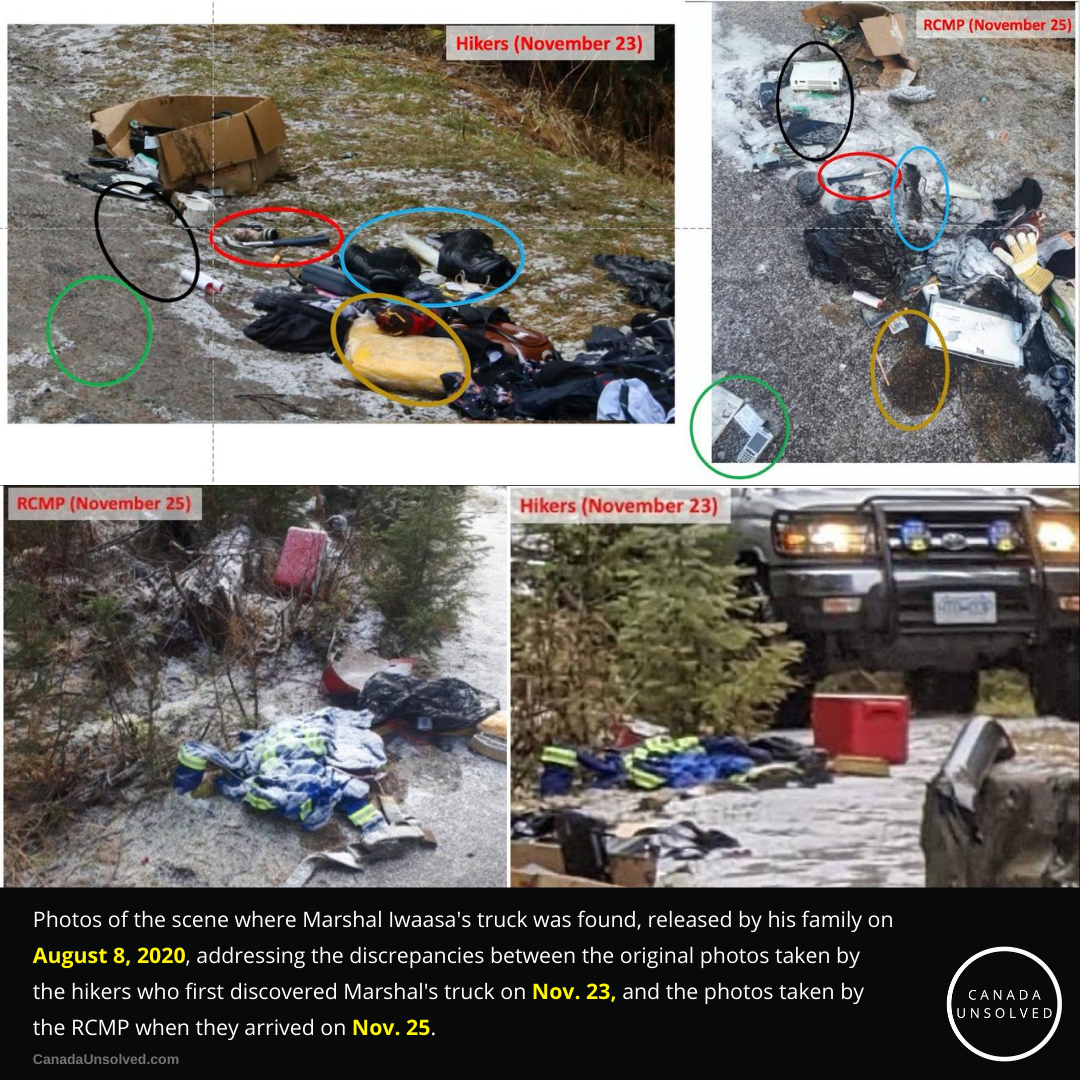
According to Lethbridge police, there is a “discrepancy” between photos taken by the hikers who located the scene and RCMP photos taken when officers arrived some time later.
“It is possible other backcountry users encountered the items prior to RCMP arrival,” police explained.
As such, police are asking anyone who may have happened across the scene and inadvertently disturbed the items to come forward.
Iwaasa’s vehicle remains where it was found
Iwaasa’s burned-out truck remains where it was located due to the “extremely challenging remote terrain where it was found,” police said.
“Due to the winter conditions when the vehicle was first located and now a rock slide blocking the access road, it is physically impossible to have a tow truck access and remove the truck at this time.”
Items recovered by police have been forensically processed
Police said Monday that all evidence in the investigation has been forensically processed, where possible, including all available electronics.
In addition, fingerprinting has been conducted with police saying “no usable prints” were found.
“All evidence is being retained for potential DNA testing,” police said. “The evidence cannot be DNA tested by the RCMP crime lab unless officers have reasonable grounds to believe a DNA-designated criminal offence has been committed. At this time, no such evidence or grounds exist.”
Police went on to explain that if the items were to be given to a private lab for DNA testing, they “may not be accepted by the RCMP lab for processing in future” and “any evidence recovered may not be admissible in court.”
Police say some investigative details cannot be shared to the public
Police said Monday that although the “vast majority” of the information learned throughout the investigation into Iwaasa’s disappearance has been shared with his family, not all can be shared publicly.
“The investigator’s report contains additional details and insights into the circumstances, scene and evidence which has not — and will not — be shared in order to protect the integrity of the ongoing investigation.”
Police say all tips received have been investigated
Police say to date, all tips disclosed to officials have been investigated.
“There have been numerous reported sightings of Iwaasa in many jurisdictions throughout Canada — often at the same time. Every tip has been followed up,” a news release stated.
“Throughout the investigation officers have continued to monitor Iwaasa’s personal affairs including potential personal contacts as well as social media, phone, medical and financial activity.
“Since Iwaasa’s disappearance there have been no footprints of life.”
Lethbridge police are asking anyone with any additional information about Iwaasa’s disappearance to contact them, saying it will be investigated.
Что случилось с лицом красавчика Игоря Верника



Столичный Four Seasons Hotel 24 ноября посетили экс-супруги Павел Прилучный и Агата Муцениеце, Регина Тодоренко, Юлия Хлынина, Ирина Пегова, Полина Гагарина, Кристина Орбакайте и другие известные актеры и певцы. Разумеется, пропустить столь значимое для Вадима Верника событие не мог его брат-близнец. Игорь Верник на протяжении всего вечера общался и снимал гостей, не забывая подшучивать над Вадимом. Так, во время его разговора с Полиной Гагариной актер не удержался и назвал их парой.
«Поля, Вадя, вы потрясающая пара», — заявил Верник.
Игорь Верник. Фото: Артем Геодакян/ТАСС
 Игорь Верник. Фото: Артем Геодакян/ТАСС
Надо сказать, что работоспособности артиста можно только позавидовать. Так, перед премией «Больше чем звезды» Верник посетил сбор труппы в МХТ имени Чехова. Интересно, что на кадрах, которые были сделаны во время обсуждения дальнейшей жизни театра, Игоря просто не узнать. На одном снимке он прикрыл лицо, продемонстрировав при этом татуировку на тыльной стороне ладони. Да и само впечатление от кадра складывается такое, будто Игорь плачет или старается спрятать лицо от камеры.
Вообще, в последнее время фанаты все чаще стали удивляться метаморфозам, которые происходят с внешностью Игоря Верника. Иногда из-за неудачного ракурса пользователи Сети легко путают 58-летнего народного артиста с другими людьми, не стесняясь писать об этом под публикациями на его странице в Instagram. Правда, сам актер, который на некоторых кадрах действительно малоузнаваем, предпочитает подобные высказывания не замечать.
 Игорь Верник. Фото: Артем Геодакян/ТАСС
«Пишут, что Матвеев неузнаваем, а я Верника только по зубам и опознал», — прокомментировал интернет-пользователь одну из недавних публикаций артиста.
Стоит отметить, что Верник очень ответственно подходит к своей внешности. К примеру, еще два года все обсуждали слухи о том, что актер якобы проходил омолаживающие процедуры в клинике эстетической медицины в Германии. Хотя сам Верник тогда же рассказывал, что много времени уделяет занятиям спортом и не забывает про здоровую пищу.
MISSING: Marshal IWAASA (Interview with Paige Fogen)
Missing since November 17, 2019 from Lethbridge, Alberta
READ AND SIGN THE PETITION
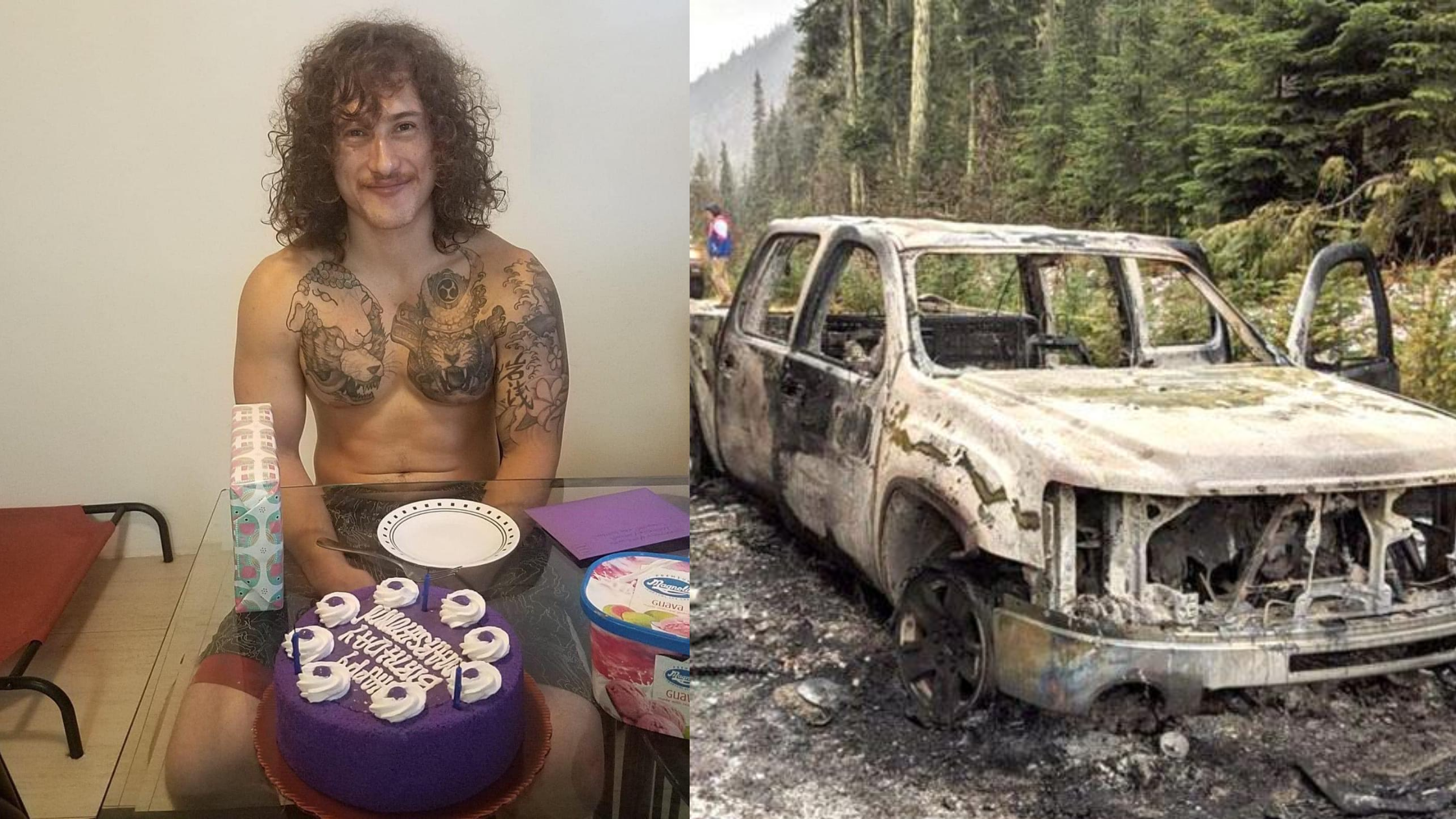
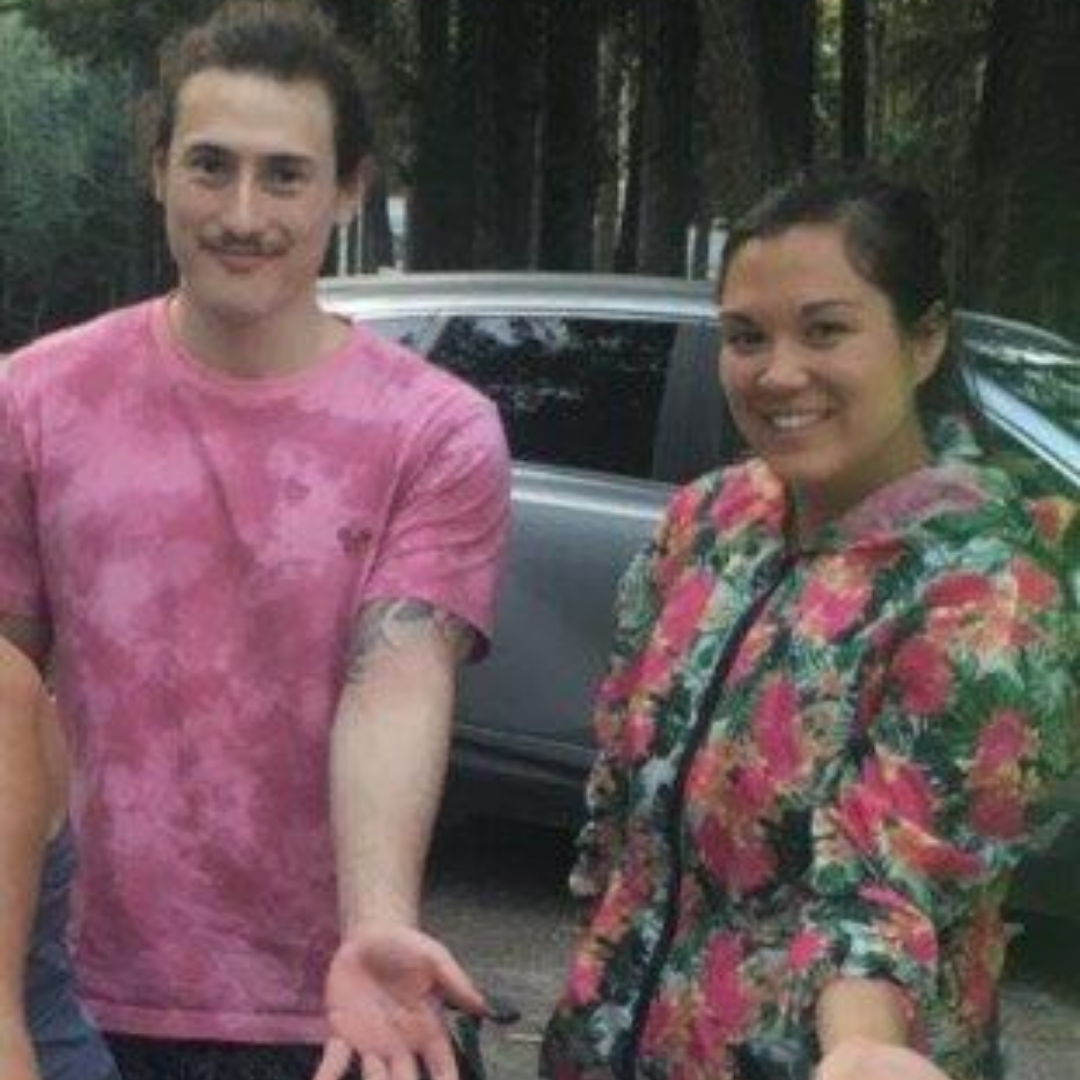
Left: Marshal Iwaasa on his 26th birthday; Right: Marshal’s truck, discovered November 23, 2019 in the backcountry outside of Pemberton, BC.
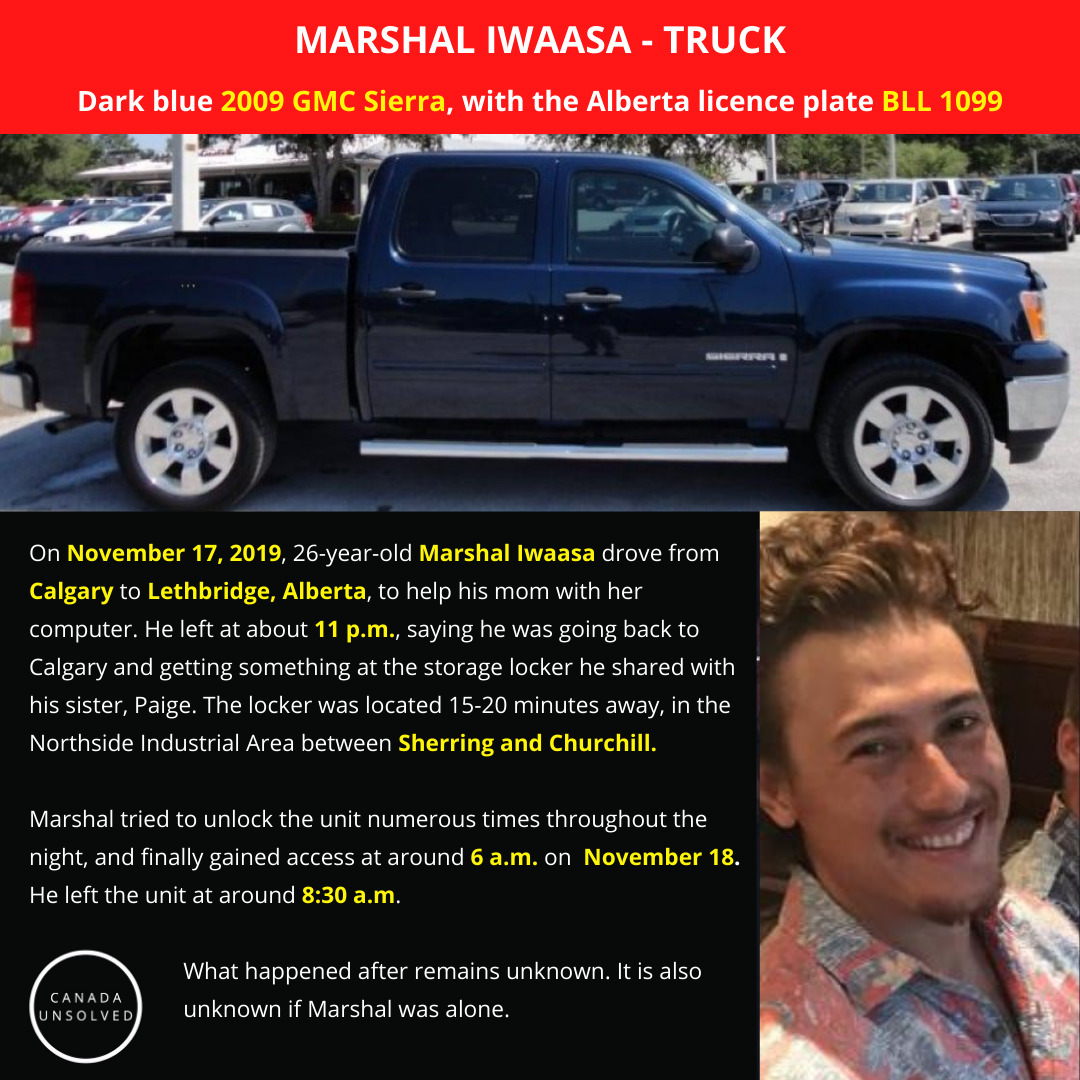
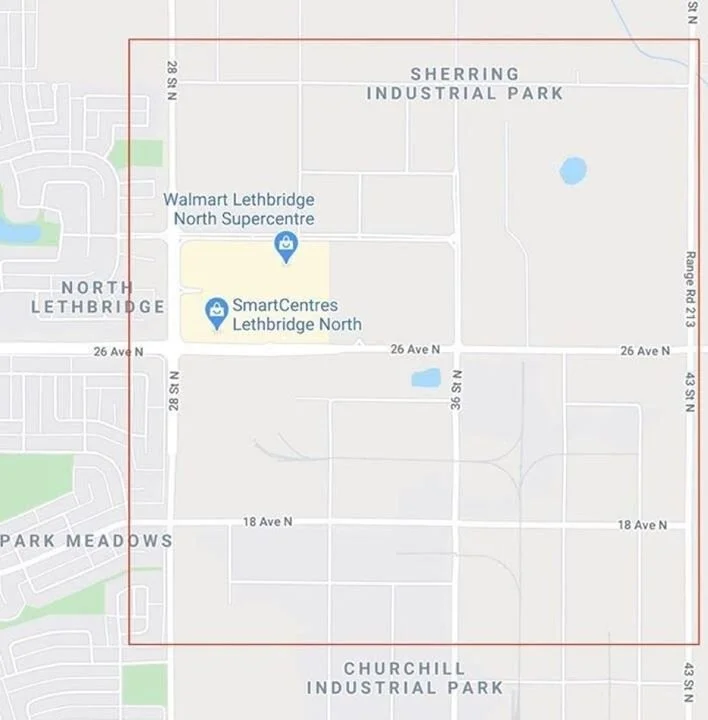
On Sunday, November 17, 2019, 26-year-old Marshal Iwaasa spent the day doing laundry and chores in the house he rented in Calgary, Alberta. In the evening, he drove his dark blue GMC Sierra truck two hours south to a city called Lethbridge, where he’d grown up. That night, Marshal spent a few hours at his mom’s house, helping her with a computer problem. He left at around 11 p.m., wearing a green hoodie, black pants, red high-top sneakers and a grey toque. Marshal told his mom he had to get something from the storage locker he’d shared with his sister for the past six years, located in the Northside Industrial Area between Sherring and Churchill, about 15 to 20 minutes away. He said he would be going back to Calgary.
Marshal never returned to Calgary.
He attempted to gain access to the storage unit several times throughout the night.
He finally unlocked the unit just after 6 a.m., and stayed for just over two hours.
He was still in the area at 8:30 a.m. on November 18, 2019.
Nobody knows what happened after.
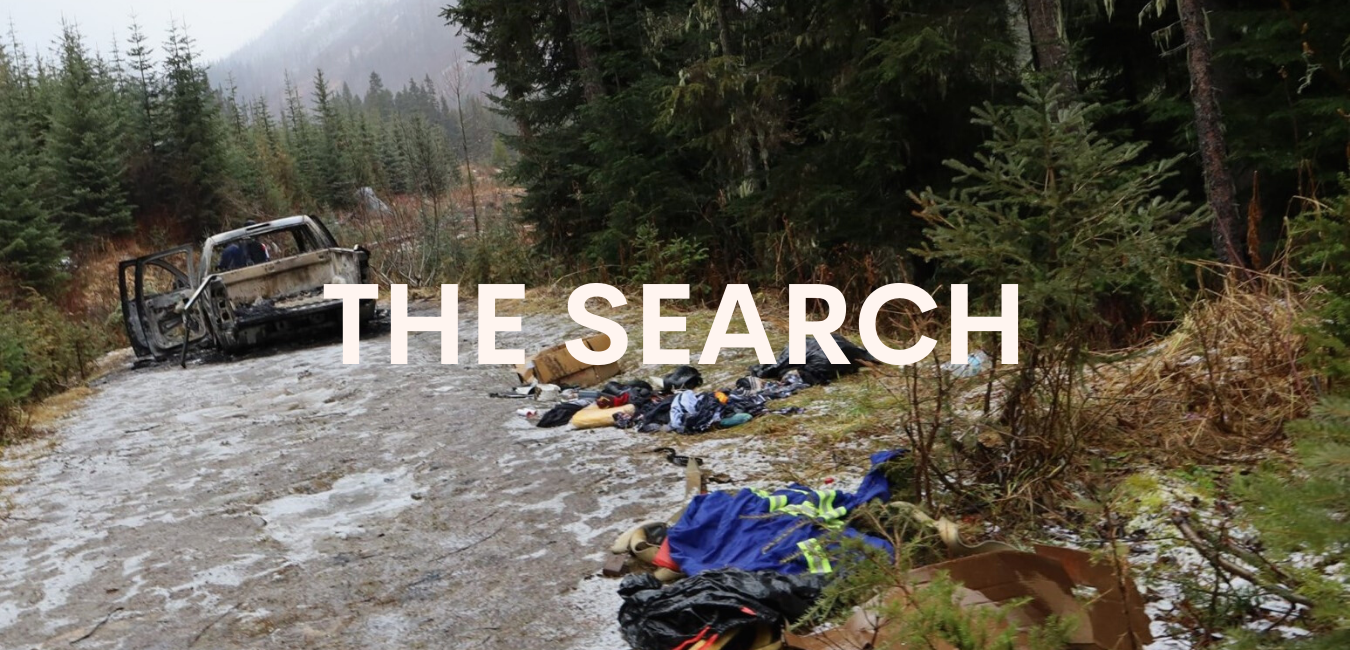
On November 23, in a remote area outside of Pemberton, BC – over 1,200 km away – Marshal’s burned-out truck was discovered by a group of hikers in a densely wooded area at the trail head to the Brian Waddington Hut. Clothing and items were scattered at the scene – other items of Marshal’s, including truck parts, were missing. There has been no sign of Marshal since he was last seen in Lethbridge. There is still no answer to how or why Marshal’s truck wound up in that location, who drove it, what caused the fire, and most importantly, what happened to Marshal.
Paige Fogen is Marshal’s sister. After visiting the scene in July, she’s confident that Marshal was not there alone, if at all. “This case needs to be pushed into criminal,” she says. “I will not be okay with this until we have answers and I won’t stop until we do.”
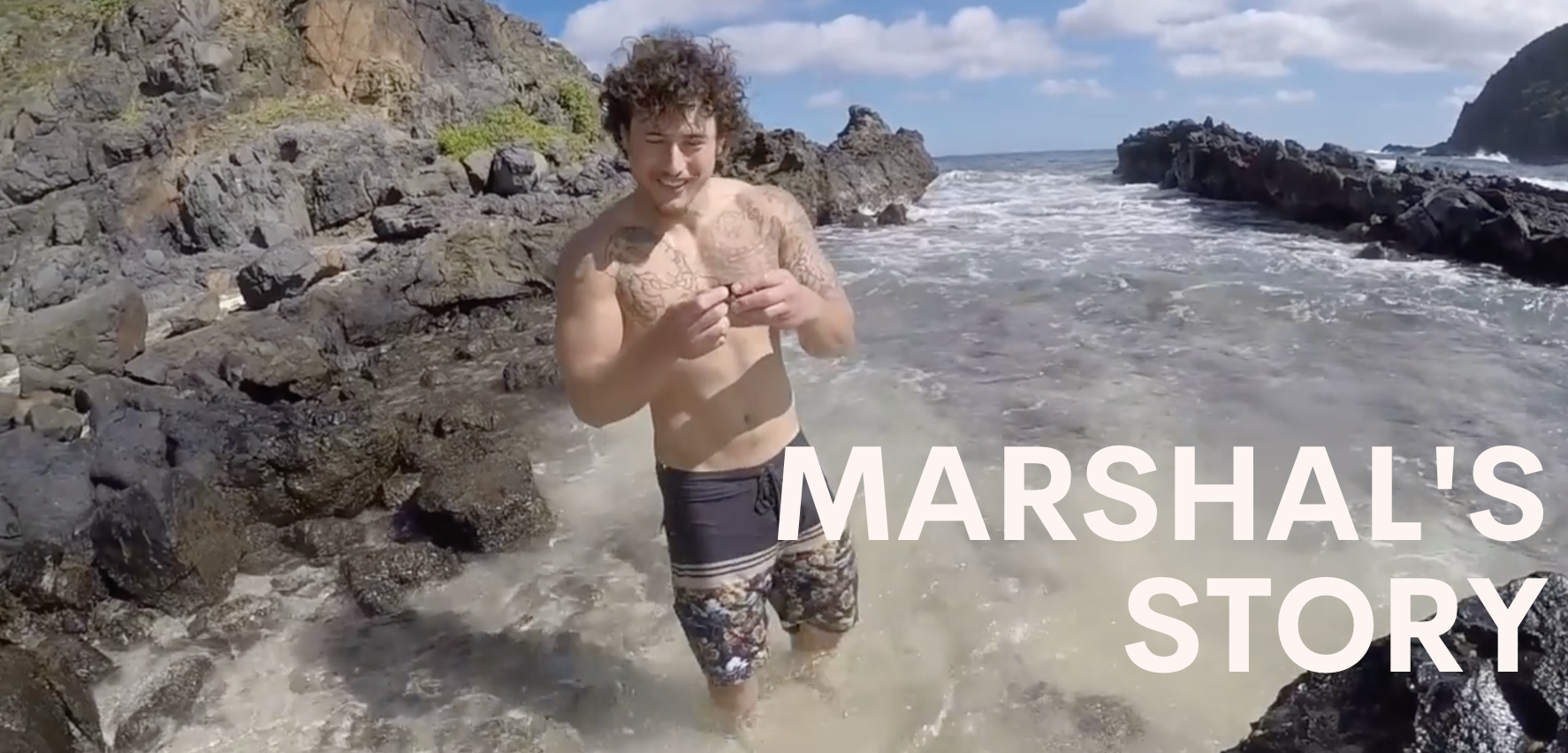
Marshal Iwaasa was born January 3, 1993, in Lethbridge, Alberta, just over an hour from the Montana border. Fogen describes Marshal as “quiet and reserved,” and “very gentle and kind.”
“I used to like joke when we were little that I had sucked up all the aggression in the womb before he was born, because I’m way more like assertive than he was,” she laughed. “But he’s always been very kind to anyone.”
Growing up, Marshal played football and rugby. He was into the outdoors; whenever he went camping, it was with friends or family. After graduating high school, Fogen said he “got way more into fitness and bodybuilding,” and that “he gained a whole bunch of new friends from that.” Marshal still kept a small group of friends throughout elementary and high school, and into adulthood. “We grew up in a really small community in Southern Alberta,” said Fogen. “You know, until now, they all kind of like grew up together.”
Marshal also worked right out of high school, and even before. For a while, he worked at a grocery store to make money. As he got older, he began working manual labor jobs in Southern Alberta. The region is known for its oil and gas industry, and manual labour jobs on power lines and rigs is common. Marshal lived with friends in Lethbridge until he enrolled in the IT program for software development at the Southern Alberta Institute of Technology (SAIT) and moved to Calgary.
According to Fogen, Marshal had friends in Calgary, but it wasn’t a large group.
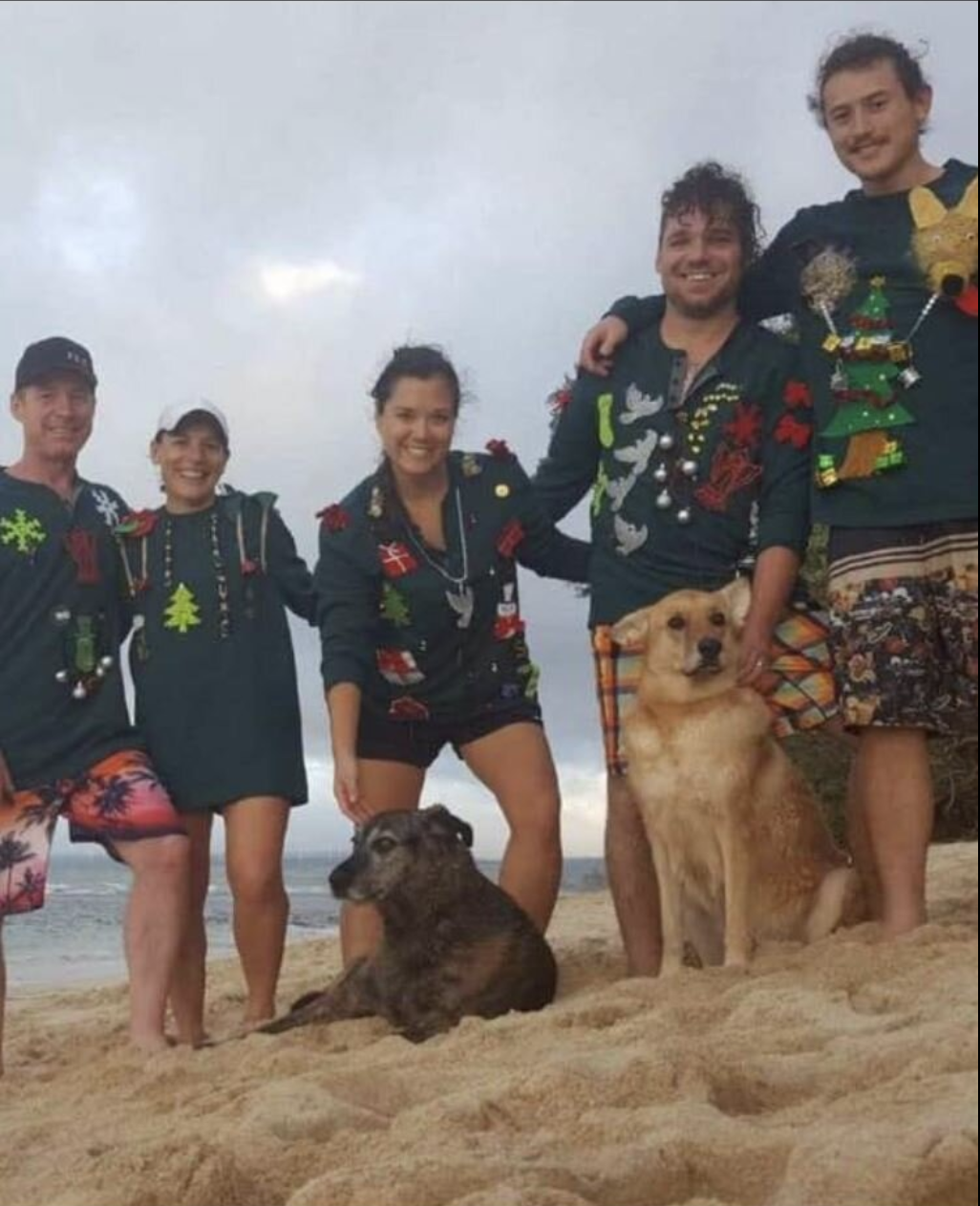
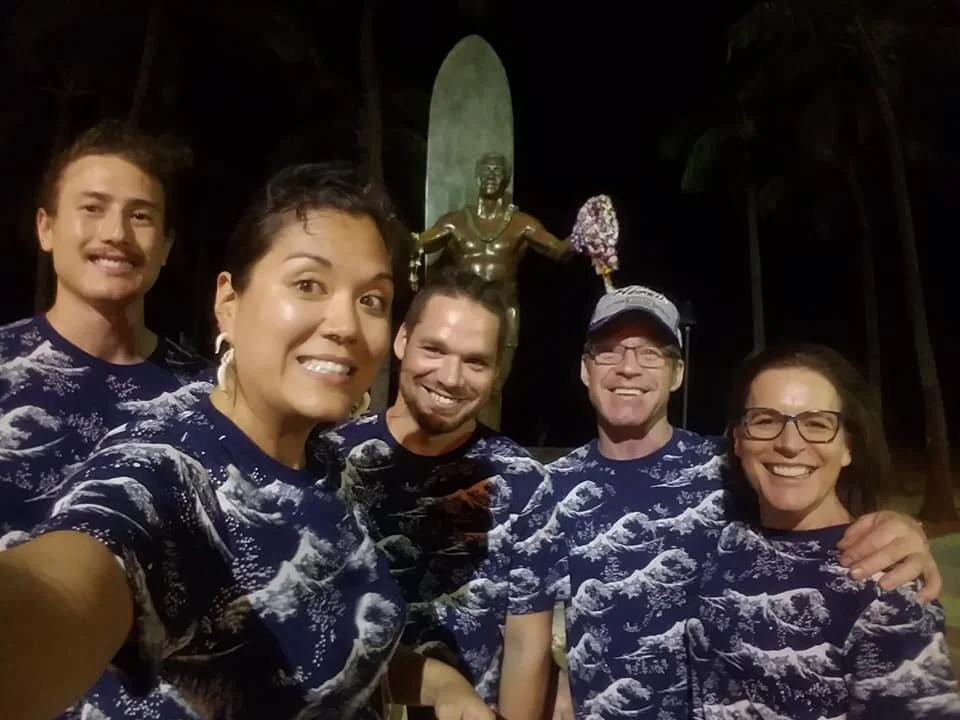
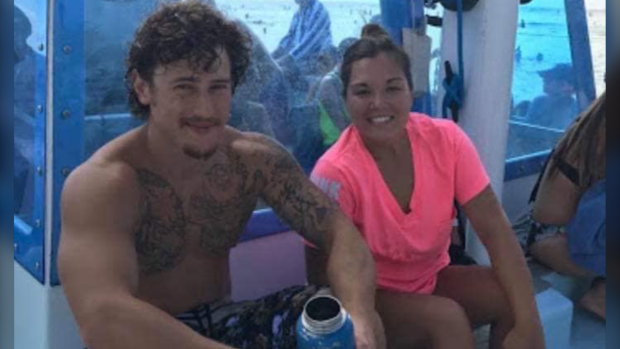
Fogen moved to Hawaii six years ago. Every six months or so, she would visit Canada – usually for a few weeks in the summer. Marshal would go to Hawaii every Christmas, at which time they’d celebrate their birthdays, which are only a week apart. They’d go to the beach, for hikes, and sometimes travel off island. “We would do like all the corny family Christmas stuff,” said Fogen. “We decorated our own ugly Christmas sweaters, then had a competition and voting, made some Christmas cookies/ gingerbread houses, then went to the beach and had a bonfire.”
“This is like really ridiculous,” she added. “We’d get ornaments and like paint the new Bob Ross. All that fun stuff.”
During the years Fogen lived in Hawaii, she and Marshal still kept in contact every week or so. “We would just text each other back and forth,” she said. “Then once he got into school though, it was longer.”
Summer 2019
The last time Fogen saw Marshal was in July and August of 2019, when she returned to Canada for a family reunion, which involved a camping trip in Montana for a week. At some point, she and Marshal went to the storage unit they’d shared for the previous six years.
“We have so much different stuff in there; it’s kind of like a mishmash of his stuff and mine,” she said. “I have mostly like books and family items, and he like kept extra household items that he had… camping stuff, tools. We had a bunch of Christmas ornaments in there.”
When Fogen returned to Honolulu in August, she left Marshal with some items to put in the unit.
Over the summer of 2019, Fogen and her family were under the impression that Marshal would be returning to SAIT in the fall semester. The topic of school wasn’t something they discussed much, but she noticed Marshal would avoid certain questions. “He would like throw kind of hints to me,” she said, adding that Marshal “would say things like, ‘in my field sometimes you don’t need like the degree. It’s just kind of like who you know and your experience.’” Fogen said it seemed like Marshal was “kind of testing the waters of like, ‘I don’t know if I’m going to go to school.’” She said it’s possible Marshal just hadn’t told them yet, but she wasn’t sure. “[We] just kind of left it at that, whenever he was ready to tell us,” she said. “We didn’t really know but we didn’t look too much into it. We just kind of let it be how it was.”
In November, after he’d been reported missing, Marshal’s family found out he hadn’t returned to school that fall.

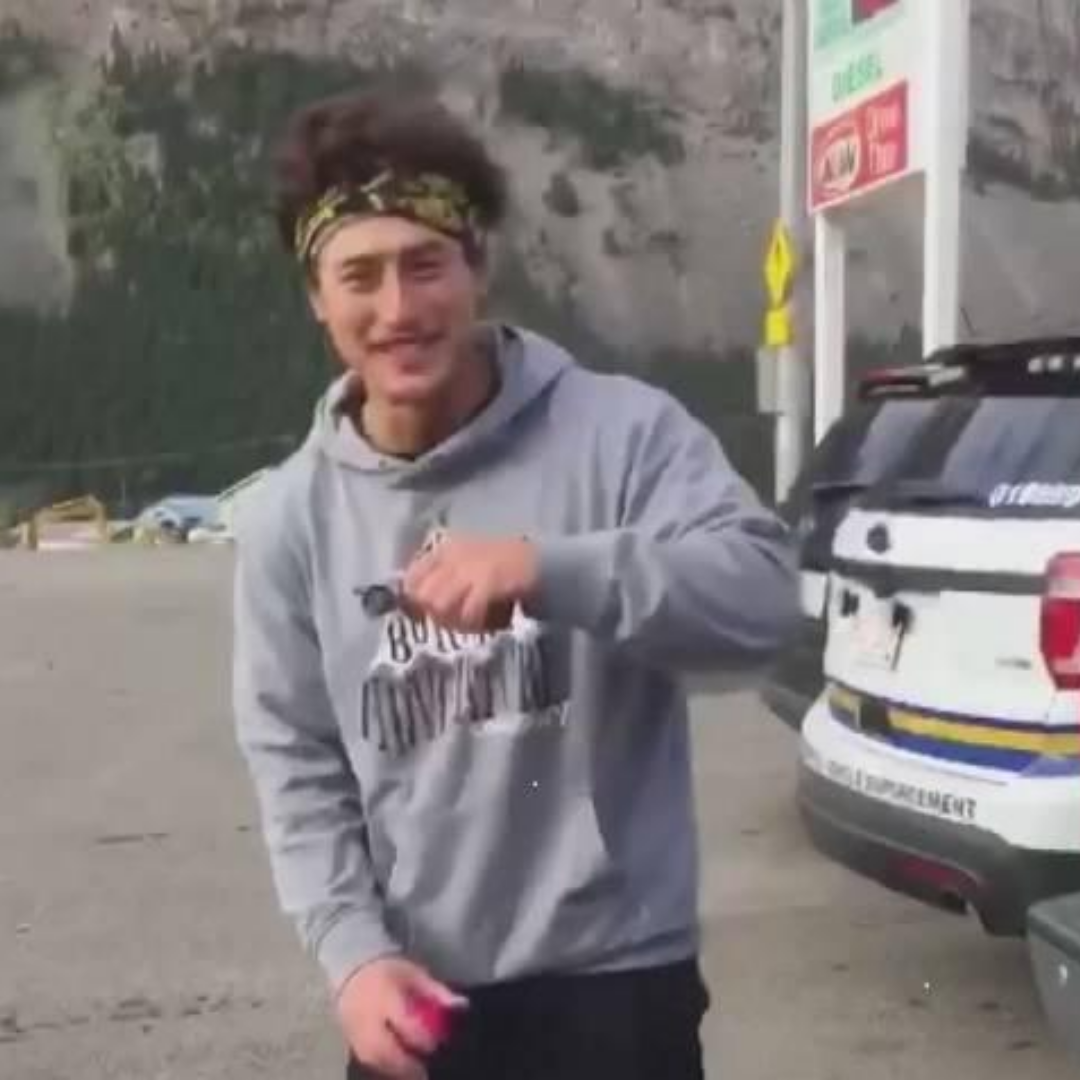
November 17, 2019: Lethbridge, AB
The financial trail of Marshal Iwaasa ended on Friday, November 15, 2019. There have been no transactions since this date.
At 11 p.m., Marshal left. He said he was getting something from the storage unit and going back to Calgary to go to school.
We know Marshal was at the storage unit at around 11:30 p.m.
We know he tried to gain access numerous times throughout the night.
“There were like multiple [attempts] in a row, just like, what I think of it as… you get there. You’re putting your code. It’s not working. You’re like, ‘what the hell’s going on?’ You’re like putting it in again. And again, try to figure it out,” she explained. “You go back and look around your shit, make sure you have the right code, go back again. Try it again.”
Based on the activity log, which Marshal’s family has, Fogen said it looks like he had tried the code a few times, “then after a while you can see he like took a break of trying to log in and then just waited until it opened.”
Fogen said that Marshal’s determination to gain access to the unit was not surprising, and that she believes he didn’t know the unit would be locked at that time.
“If he’s determined to get something, or like needed something that he drove down from Calgary to get, he would just like wait it out,” she said. “He would be determined to get it.”
We know Marshal gained access to the unit just after 6 a.m. on Monday, November 18, and stayed until about 8:30 a.m.
This is the last indication of Marshal Iwaasa.
We don’t know if he was alone, or what exactly happened after. Everything was still in the storage unit, including Marshal’s camping gear. There is no video footage of Marshal leaving the area, and over the next week, no evidence of Marshal and his truck anywhere else.
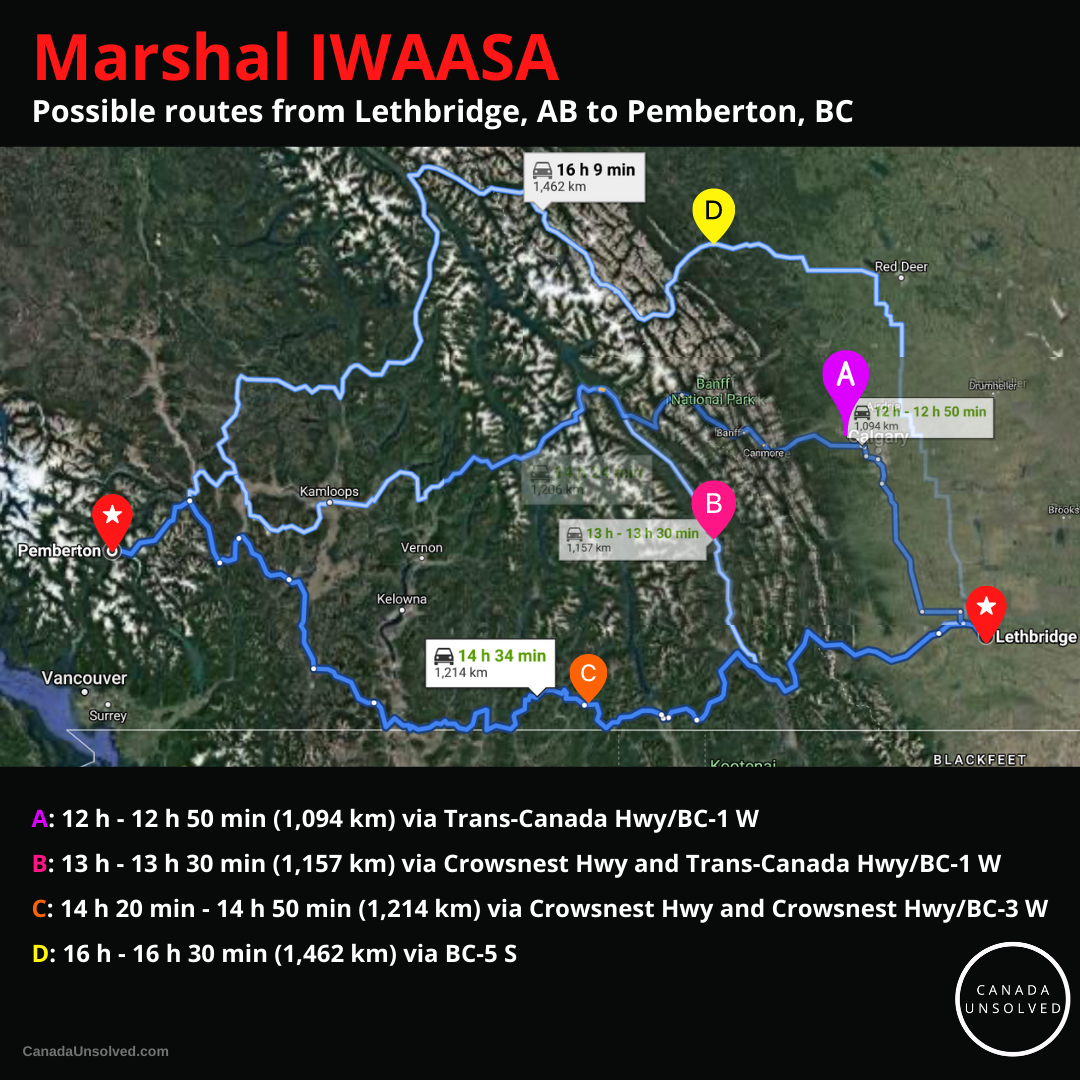
Northside Industrial Area between Sherring and Churchill: Lethbridge, AB
November 23, 2019: Truck discovered in Pemberton, BC
We are not only looking at one thing of what it could be. We’ve been open to all things. We have gone through all scenarios.
The drive to the trailhead is a journey across slick mud, gravel, boulders, potholes and creeks.
It’s inaccessible by GPS. It requires four-wheel drive.
It’s not easy, and it’s not a place you’d happen upon by accident.
It was later determined that parts of Marshal’s truck, which he’d recently paid off, were missing. It’s possible they’d been stripped.
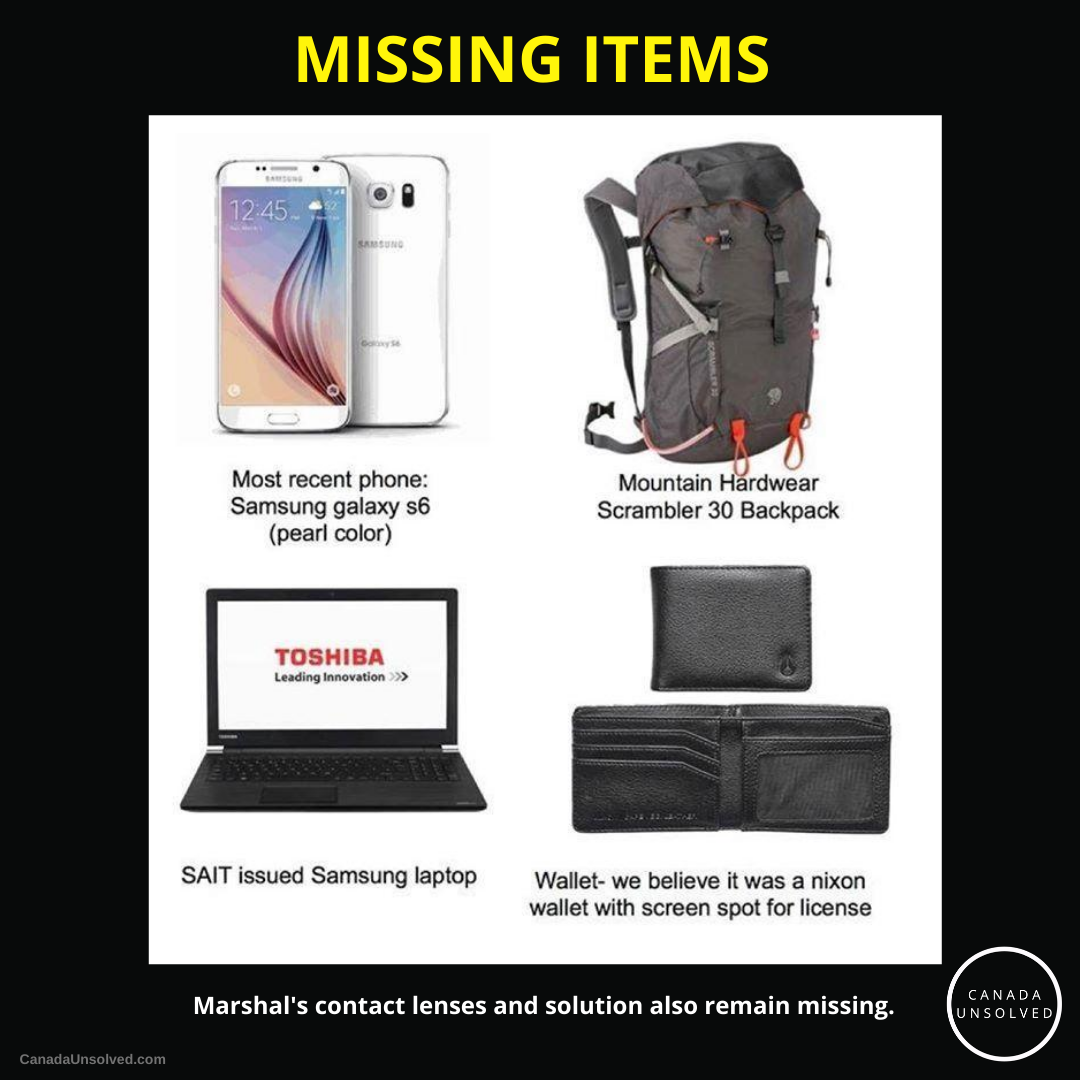
His contact lenses, contact solution, a Mountain Hardwear Scrambler 30 backpack, his SAIT issued Samsung Laptop, his wallet – believed to be a Nixon wallet with a screen spot for a license – and his most recent phone: a pearl-coloured Samsung Galaxy s6, were also missing, and have never been found.
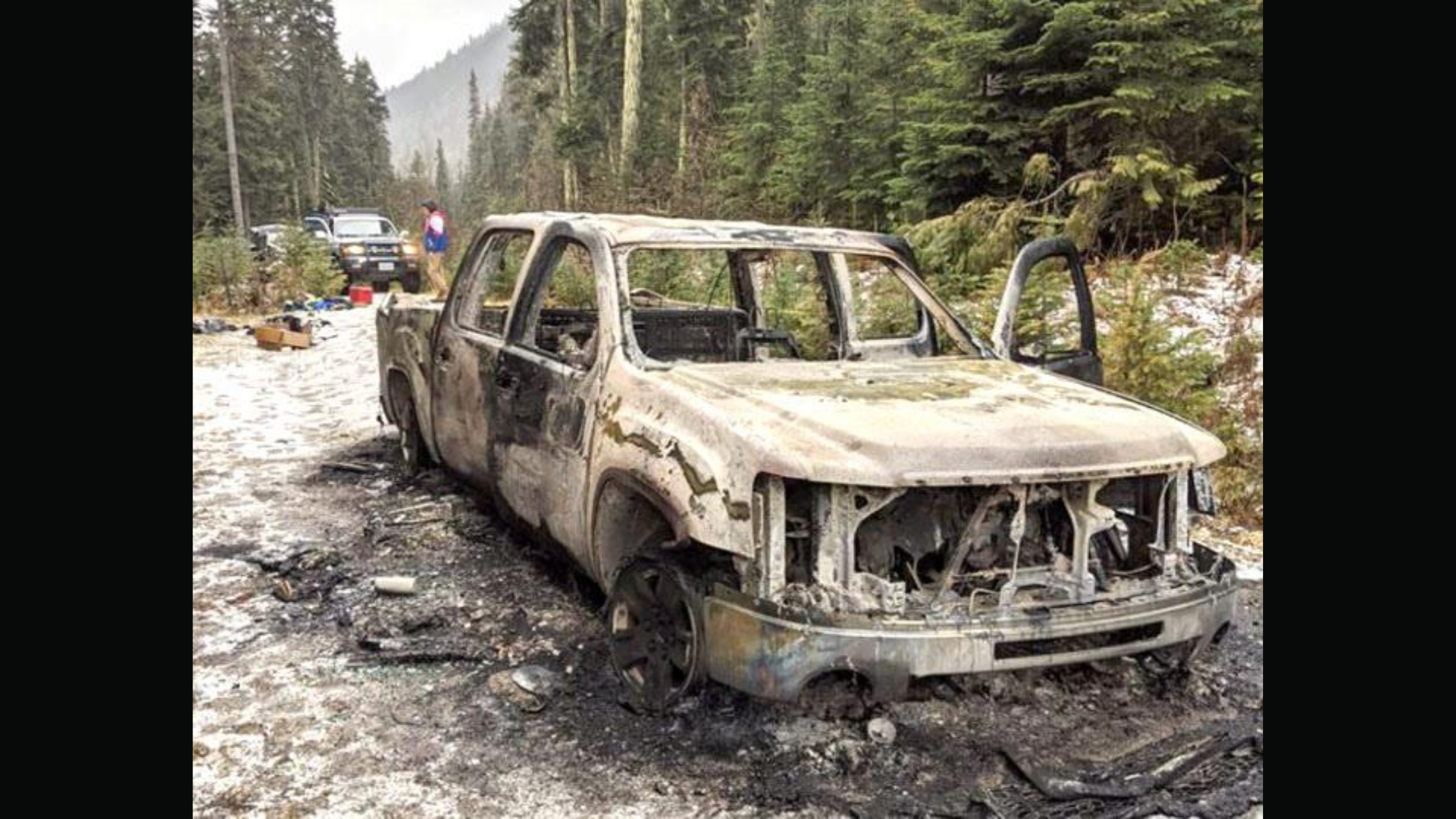

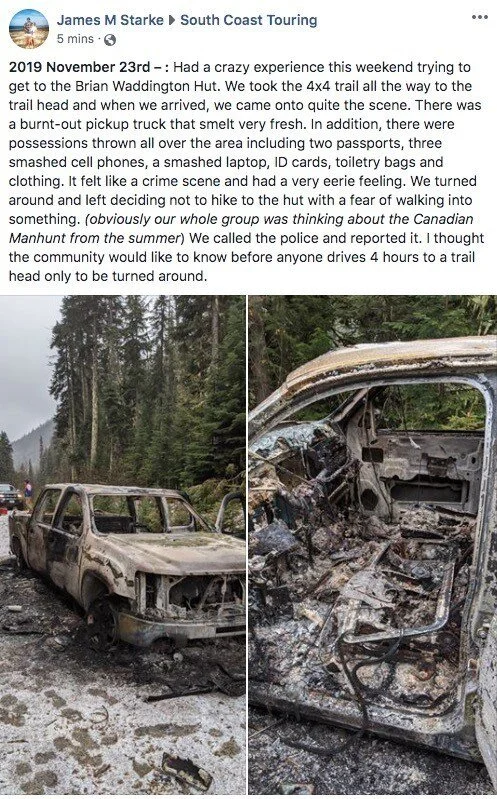
Facebook photo: Images taken the day Marshal Iwaasa’s truck was discovered on November 23, 2019. Photos by James Starke.
James Starke is one of the hikers who took the photos of Marshal’s torched truck. He posted them to the South Coast Touring Facebook group. “It felt like a crime scene and had a very eerie feeling,” he said in the post. According to a CTV News article, in which Starke was interviewed, nobody except he and his group had been registered to stay at the hut. They were on their way there when they made the discovery.
Fogen said Marshal had no connection to the Pemberton area, nor did anyone in their family.
After the hikers reported their discovery to police, BC RCMP spent two days attempting to access the site. One of their vehicles had been damaged during the initial attempts. When they arrived on November 25, more photos of the scene were taken.
Nobody was yet aware, but something had happened in those two days.
November 26, 2019
Marshal’s mother and sister were in Hawaii when they received a call on November 26 from BC RCMP asking if they knew where Marshal was. They were told that his truck had been found in a remote area of Pemberton, BC; police didn’t elaborate on the circumstances.
“I didn’t realize how crazy it was… how it was like burnt out, and I don’t think I imagined that. But we definitely knew like it was weird for his truck to be there without him there.” Fogen’s initial thought was that Marshal’s truck had been stolen, and that Marshal would probably find out soon. “Once I got that call, I ended up calling my cousins and Marshal’s friends and asking if any of them had talked to him,” she said. “[Asking] if they knew where he was.”
“Lethbridge is pretty small,” explained Fogen. Marshal’s family in Lethbridge immediately began searching for him there.
Nobody could find Marshal, or anyone who had talked to him recently, nor could they figure out why Marshal’s truck would be over 1,200 km away, in a place where he had never been. “We couldn’t figure anything out.” Marshal was reported missing that day.
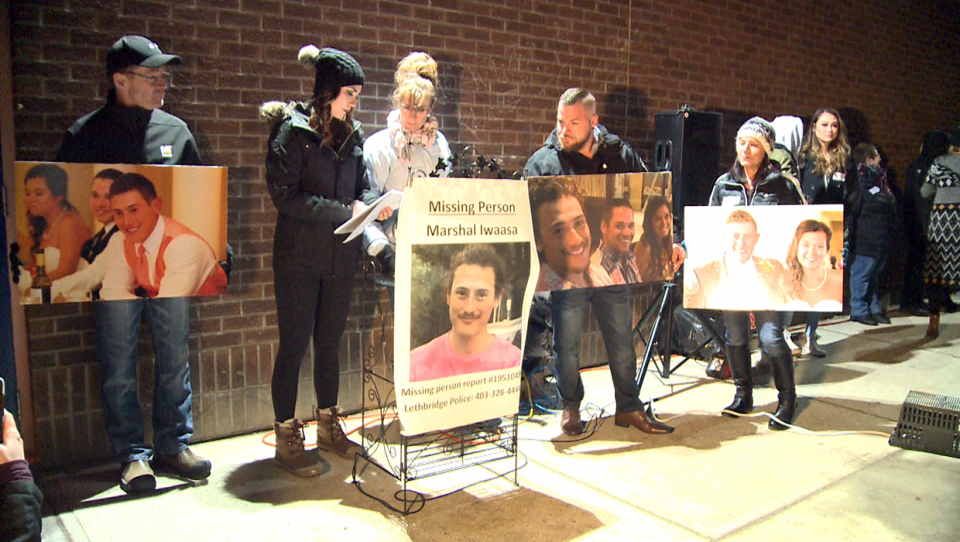
The following days were “crazy” and “super stressful” as Fogen and her family tried to piece together what was happening from Hawaii. Within three days, the Facebook group FIND MARSHAL IWAASA was created by his family to appeal for information. It now has over 12,400 members.
You have to fill up gas if you’re driving that truck. So what’s to say it was Marshall driving that truck up there?
The lack of visual evidence, in conjunction with Marshal’s financial records – which indicated that he never filled up his truck with gas along the route, or made any transactions elsewhere – begs the question: who drove Marshal’s truck to Pemberton?
“They have gotten a little bit more to his financial records and did not find any occurrence of him filling up gas,” Fogen said. “That itself is suspicious… you have to fill up gas if you’re driving that truck. So what’s to say it was Marshall driving that truck up there?”
The images clearly highlight the missing, moved and damaged items. In one image, it looks as if a phone and other items were neatly placed beside each other on the ground. Fogen has never had the opportunity to look through all the items at the scene, but she said she knows that some items do not belong to Marshal.
Initially, Marshal’s family identified the gaming consoles as belonging to him. In January 2020, when Fogen went to Marshal’s house in Calgary and discovered his Xbox and Playstation were still there, she realized the ones discovered at the scene did not belong to her brother. The owner of the consoles found with Marshal’s truck is unknown.
There’s also the issue of the steering column, which had been removed from Marshal’s truck. “We confirmed that RCMP did not take it, so it was always missing,” said Fogen.
Who was at the scene during those two days?
The RCMP has preserved the items, but nothing has been tested. “We don’t know whose DNA is up there,” said Fogen. “We don’t know whose fingerprints are up there. They just have the items, but they aren’t running them.” In a press release, Lethbridge Police said, “The evidence cannot be DNA tested by the RCMP crime lab unless officers have reasonable grounds to believe a DNA-designated criminal offence has been committed. At this time, no such evidence or grounds exist.”
What Happened?
I think the biggest thing I would want to clear up is this: This case needs to be pushed into criminal. It needs to be investigated as criminal.
The border was notified about Marshal’s disappearance, and was checked. It was confirmed that Marshal never legally entered the United States. Pawn shops in Canada were also checked. Extensive searches conducted by Marshal’s family, BC RCMP and private investigators have yet to locate any sign of Marshal or his missing items. On Wednesday, December 4, 2019, BC RCMP announced that the initial search for Marshal had been suspended due to ongoing snowmelt. That month, Pemberton RCMP turned over the investigation to the Lethbridge Police Service.
On Friday May 22, 2020, the truck site and surrounding area was searched using cadaver dogs. That evening, the Iwaasa family was informed by LPS that the search had been completed and that nothing was found. Another ‘exhaustive search’ in BC began on June 24, involving Lethbridge Police, members of the Pemberton RCMP and surrounding detachments, 12 police officers in total, along with 15 Search and Rescue personnel from Pemberton and Squamish. A helicopter and all-terrain vehicles were used to access the site, and police said an RCMP fire investigator, several private investigators and members of the Canadian Search and Disaster Dogs Association would be conducting a ground search.
Almost nine months later, nobody knows what happened after 8:30 a.m. on Monday, November 18. There is no way of knowing which route Marshal’s truck took from Lethbridge to Pemberton. There is no trace of his items, which remain missing. There has been no financial or phone activity since before Marshal was last seen.
Fogen emphasized that her family is open to, and have considered, all scenarios. The weather during the first few weeks of the search was fairly mild. As Marshal’s family was “still figuring things out,” Fogen was concerned about the possibility that Marshal might have been out there and exposed to the elements; she thought about hypothermia and animals. She was told that for the first three or four nights, “he definitely could have survived… he would have been cold or uncomfortable but he would have been fine.”
That was in the beginning.
Awareness, Challenges & the Push for a Criminal Case
I will not be okay with this until we have answers, and I won’t stop until we do.

“It was so hard to get up there,” she said, emphasizing the distance and struggle of getting to the site, which took them over 30 hours.
“So, we can now say, ‘Okay, Pemberton Mountain. There isn’t a body on that site.’ So now they need to look at other options. They thought that they would find him come spring or when they did the search, and now they’ve not found him. So now they need to start looking at other things.”
One of the many challenges with Marshal’s case is how RCMP failed to conduct a fire report at the time of the discovery. In November, there was no attempt to investigate the source or timing of the fire, yet police said an examination of the vehicle and the area at the time offered “no evidence to suggest a criminal offence had been committed and no evidence to suggest that anyone other than Iwaasa was present when the vehicle was burned.”
The private investigators hired by Marshal’s family had pushed for the fire investigation, which finally happened in June. Fogen is still waiting for the results. They still have no answers as to when or how the fire occurred.
Should the results indicate arson, it would mean Marshal’s case would become a criminal investigation – which remains the focus for Fogen and her family going forward.
“We shouldn’t have to push this hard to get these types of answers,” she said.
Marshal’s disappearance has gained significant media attention, in large part due to the efforts of Fogen and her family to advocate for Marshal, their support for one another, and their willingness to pursue any avenue to share Marshal’s story.
Support from the community includes that of other families with missing loved ones, who have provided guidance and support since the start. Fogen noted that most of their group is based in western Canada, and is grateful to those who continue to spread awareness about Marshal wherever they are.
“This is something that I do want to help make better changes for because I don’t want other families have to go through this quite frankly.”
It’s so easy for these cases to get swept under and to just get overlooked or passed off as self-harm, suicide or getting lost. It’s so easy for that to happen and you know, there needs to be like some kind of systemic changes happening to how missing persons cases are handled.